

Top Commodity Mould Manufacturer Advances Precision Plastic Packaging Solutions
Commodity Mould
TAIZHOU, ZHEJIANG, CHINA, September 30, 2026 /EINPresswire.com/ --
As demand for efficient, reliable, and increasingly specialized plastic packaging continues to grow across global consumer markets, Taizhou Huangyan MinCong Mould and Plastic Co., Ltd. is developing its role in the commodity mould manufacturing sector. Based in Huangyan, Taizhou, Zhejiang, the company operates within one of China's well-established mould manufacturing regions, where plastic injection tooling supports a wide range of packaging, household, industrial, and consumer applications. Its focus on mould solutions reflects the broader development of the plastics industry, where manufacturers are increasingly expected to provide tooling that combines precision, repeatability, production efficiency, and compatibility with modern injection molding processes.
Plastic moulds are fundamental to high-volume manufacturing because they determine the shape, dimensions, surface details, and functional characteristics of injection-molded products. In applications such as packaging, small differences in mould design can influence product consistency, cycle time, material usage, assembly, and the overall efficiency of a production line. As brands and manufacturers continue to introduce new packaging formats and adapt products to different markets, mould engineering has become an important part of the product development process.
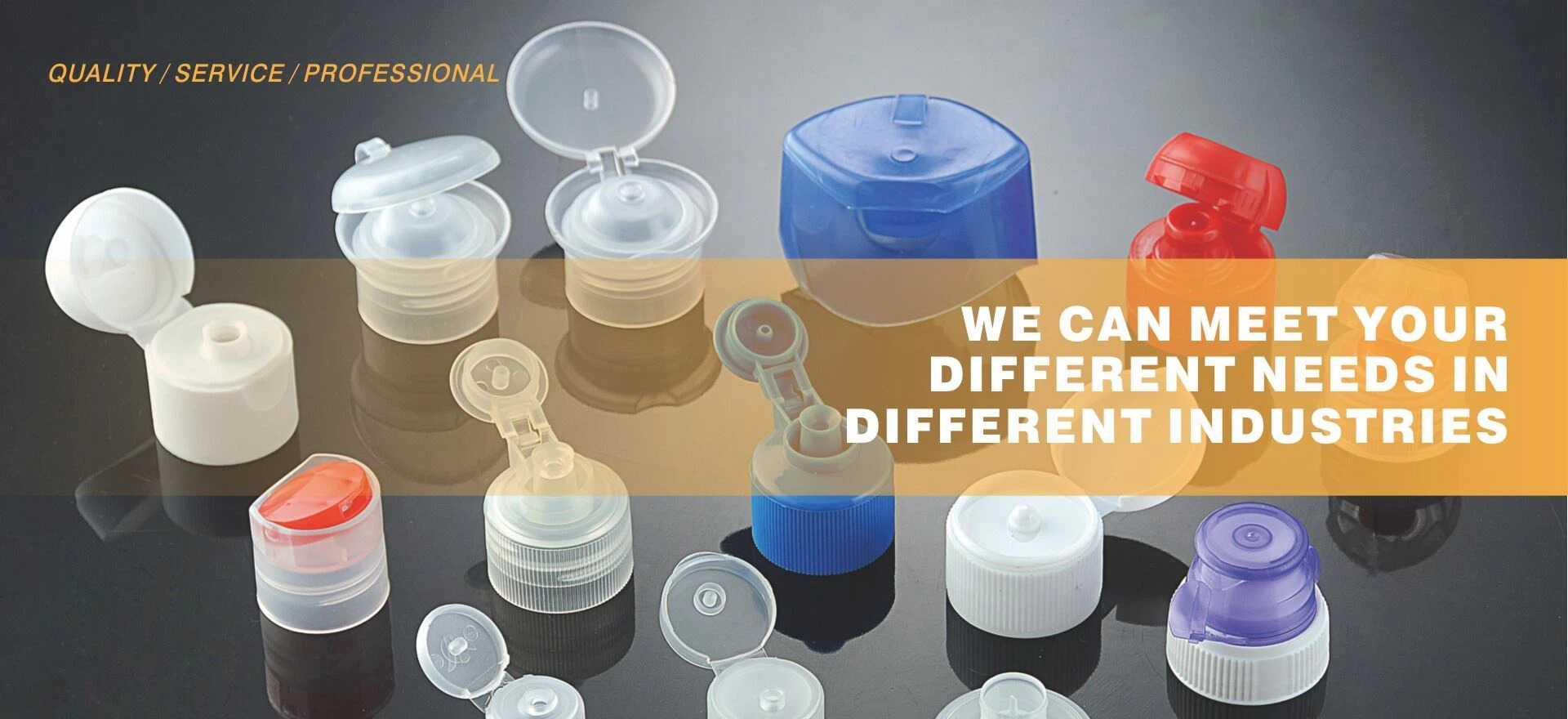
Within this environment, Taizhou Huangyan MinCong Mould and Plastic Co., Ltd. focuses on mould solutions associated with plastic products and packaging applications. Its product portfolio includes Flip Top Cap Mould, a tooling category designed for the production of plastic caps with hinged opening and closing structures. Flip-top closures are widely used in consumer packaging because they allow users to access a container repeatedly while keeping the closure connected to the package.
The design of a Flip Top Cap Mould requires attention to several functional details. The mould needs to reproduce the external shape of the cap while also accommodating features such as the hinge, opening mechanism, sealing structure, thread or connection area, and internal cavity geometry where applicable. These elements need to work together to ensure that the finished cap can be molded consistently and perform its intended function during subsequent assembly and consumer use.
For packaging manufacturers, cap tooling is closely connected to production efficiency. A mould used for high-volume injection molding must withstand repeated cycles while maintaining dimensional stability and product quality. The design of the cavity, core, runner system, cooling channels, ejection mechanism, and other components can influence cycle time and production consistency. Careful engineering is therefore important before a mould enters mass production.
The development of plastic packaging has also increased the variety of closure designs available to manufacturers. Different products may require different neck finishes, sealing structures, cap sizes, opening mechanisms, or visual appearances. Water bottles, personal-care products, household products, food packaging, and other consumer goods can all require specialized closures. This diversity creates a need for mould manufacturers that can adapt tooling designs to specific product requirements.
Plastic Injection Cap Molding is another area represented within the company's product offering. Injection molding remains one of the major production methods for plastic caps because it can support repeatable production of complex geometries at commercial volumes. The process generally involves feeding thermoplastic material into an injection molding machine, melting the material, injecting it into a mould cavity under controlled pressure, allowing it to cool, and then ejecting the finished component.
The performance of a Plastic Injection Cap Molding system depends on the interaction between mould design and injection molding parameters. Material selection, melt temperature, injection pressure, holding pressure, cooling time, and ejection conditions can all influence the final product. A well-designed mould can help manufacturers achieve more consistent filling, cooling, shrinkage control, and part release.
Mould cooling is particularly important in injection molding. After molten plastic enters the cavity, the material must cool sufficiently before the finished cap can be ejected. Efficient and evenly distributed cooling channels can contribute to shorter cycles and more uniform dimensional results. Uneven cooling, by contrast, may contribute to warpage or dimensional differences. For high-volume cap production, cooling design is therefore an important engineering consideration.
The mould structure itself also requires careful planning. Depending on the cap design, tooling may include multiple cavities to increase production output. Multi-cavity moulds require precise alignment and balanced material distribution so that individual cavities can produce parts with comparable dimensions and quality. Runner and gate design consequently becomes an important part of the mould-development process.
The growing demand for lightweight packaging has further increased the importance of mould engineering. Packaging manufacturers often seek to reduce material consumption while maintaining sufficient strength and functional performance. Lightweighting can require more precise control over wall thickness, filling behavior, cooling, and shrinkage. A mould that is designed around these requirements can support manufacturers as they optimize product structures and production processes.
Huangyan's role in the mould industry provides a broader context for companies operating in this field. The district is widely recognized as a major mould manufacturing center in China, with local companies producing tooling for packaging, automotive components, household products, crates, pallets, bottle caps, and other plastic products. Public industry sources show a substantial concentration of mould manufacturers in Taizhou and Huangyan, illustrating the area's established manufacturing ecosystem.
This industrial ecosystem can provide mould companies with access to supporting capabilities such as machining, steel processing, injection molding, component manufacturing, surface treatment, testing, and logistics. For an international buyer, the availability of these supporting industries can be relevant because mould production is rarely limited to a single machining operation. Design, material preparation, precision processing, assembly, testing, and final adjustments all contribute to the finished tooling.
Mould steel selection is another important consideration. The material used for a mould needs to correspond with factors such as production volume, plastic material, expected service life, surface requirements, and maintenance strategy. Different tooling components may have different requirements for hardness, wear resistance, corrosion resistance, and machinability. Selecting appropriate materials can therefore form part of the broader engineering process.
Precision machining is equally significant. Mould components often involve tight dimensional relationships, particularly in cap moulds where small variations can affect threads, seals, hinges, snap-fit structures, or connections between components. CNC machining, precision grinding, electrical discharge machining, and other processes may be used depending on the geometry and required tolerance. The objective is to ensure that the individual components can be assembled into a functioning mould with the required accuracy.
Mould testing is another stage that can provide valuable information before a tool enters full production. Trial molding allows engineers to observe filling behavior, cooling performance, ejection, part dimensions, surface appearance, and other characteristics. If adjustments are necessary, the mould can be modified before being released for regular production. For packaging customers, this process can help reduce the risk of discovering significant tooling issues after mass production has already begun.
Flip Top Cap Mould projects can require particular attention to moving components because the finished product may incorporate a functional hinge or opening mechanism. The mould must reproduce these details while also allowing the molded part to be released without damage. Depending on the specific design, engineering decisions may involve parting-line placement, ejection strategy, gate location, cooling configuration, and the geometry of the cavity and core.
Product design and mould design are consequently closely connected. A cap that appears simple from the outside can contain several functional elements that influence tooling complexity. Before mould manufacturing begins, engineers typically need accurate product drawings or three-dimensional data, material information, dimensional requirements, and production targets. Early coordination between product designers, mould engineers, and injection molding specialists can help identify potential manufacturing challenges.
For international buyers, communication is an increasingly important part of mould sourcing. A mould is generally developed for a specific product, injection molding machine, material, and production requirement. Details such as machine dimensions, maximum mold size, clamping force, injection capacity, cooling connections, ejection configuration, and product material can affect the tooling design. Clear technical communication can therefore help ensure compatibility between the finished mould and the customer's production equipment.
The rise of global private-label and contract manufacturing has also expanded demand for customized packaging tooling. Brands may require unique cap shapes, customized dimensions, special colors, embossed logos, or different closure mechanisms to distinguish their products. Rather than relying exclusively on standard packaging components, manufacturers can use customized moulds to create differentiated designs.
This trend is relevant to Plastic Injection Cap Molding because the injection molding process can accommodate a broad range of thermoplastic product geometries. Once an appropriate mould has been developed, the same tooling can potentially support repeat production over a long manufacturing cycle, subject to the mould's design, material, maintenance, and operating conditions.
Maintenance is another important aspect of mould ownership. Even a well-engineered mould is exposed to repeated thermal and mechanical cycles during production. Components can gradually wear, while gates, cooling channels, ejector systems, and moving mechanisms may require inspection or servicing. Regular maintenance can help preserve mould performance and reduce unexpected interruptions in production.
For cap manufacturers, maintenance can be particularly important because packaging production is often conducted at high volume. An interruption in cap production can affect filling, assembly, packaging, and distribution operations downstream. Preventive maintenance, spare components, cleaning, lubrication where appropriate, and periodic inspection can therefore form part of a broader tooling management strategy.
Sustainability is also influencing the plastic packaging industry. Lightweighting, material efficiency, recyclable polymers, and improved production efficiency are increasingly discussed across packaging supply chains. While the environmental performance of a final product depends on many factors beyond the mould itself, tooling design can contribute indirectly by supporting controlled wall thickness, efficient production cycles, and consistent part quality.
For mould manufacturers, these trends create a need to balance traditional tooling expertise with changing packaging requirements. Customers may expect shorter development cycles, greater design flexibility, efficient production, and compatibility with newer materials. Digital design tools and computer-aided engineering can support this process by allowing mould structures and potential filling behavior to be evaluated before machining begins.
The role of Taizhou Huangyan MinCong Mould and Plastic Co., Ltd. can therefore be understood within a broader transition in plastic mould manufacturing. As packaging companies seek increasingly specialized closures and more efficient production methods, tooling suppliers remain important partners in converting product concepts into repeatable manufacturing processes.
The combination of Flip Top Cap Mould and Plastic Injection Cap Molding illustrates the connection between tooling and final packaging production. A mould is not simply a metal component used by an injection molding machine; it is an engineered system that determines how a product is formed, cooled, released, and reproduced across potentially thousands or millions of production cycles.
For packaging manufacturers, the ability to work with a mould supplier from design through tooling development and testing can help create a more coordinated production process. Clear specifications, accurate product data, appropriate material selection, careful machining, and trial molding can all contribute to a successful tooling project.
As demand for plastic packaging continues to diversify, commodity mould manufacturers will remain part of a supply chain that supports beverage packaging, personal care, household goods, food containers, and other consumer products. The continued development of closure designs, lightweight packaging, and customized products will require tooling that can accommodate both established production methods and changing product concepts.
About Taizhou Huangyan MinCong Mould and Plastic Co., Ltd.
Taizhou Huangyan MinCong Mould and Plastic Co., Ltd. is a China-based mould and plastic manufacturing company located in Huangyan, Taizhou, Zhejiang Province. The company focuses on mould-related solutions for plastic products, with its portfolio including Flip Top Cap Mould and Plastic Injection Cap Molding. Its position in Huangyan places the company within a region widely associated with China's mould and plastics manufacturing industry, where specialized tooling companies serve packaging, household, industrial, automotive, and other applications. Public industry information confirms the strong concentration of plastic mould manufacturers in the Huangyan and Taizhou area.
For international buyers, packaging manufacturers, and other business partners seeking additional information about Taizhou Huangyan MinCong Mould and Plastic Co., Ltd., the company's website, [www.capmoldsupplier.com], provides further information about its product range and mould-related services. Through its focus on cap tooling and plastic injection solutions, the company participates in a manufacturing sector where precision, repeatability, production efficiency, and adaptability remain important considerations for modern packaging production.
Address: No.158 Huang Zhou Road, Western industry, Huang Yan District, Taizhou City, Zhejiang Province
Official Website: https://www.capmoldsupplier.com
Tony Wang
Taizhou Huangyan MinCong Mould and Plastic Co., Ltd.
Mouldsupplier6@gmail.com
Legal Disclaimer:
EIN Presswire provides this news content "as is" without warranty of any kind. We do not accept any responsibility or liability for the accuracy, content, images, videos, licenses, completeness, legality, or reliability of the information contained in this article. If you have any complaints or copyright issues related to this article, kindly contact the author above.
