How Sanku Maots'Ai Builds a Profitable Fast Food Chain Through Standardization and Supply Chain Innovation
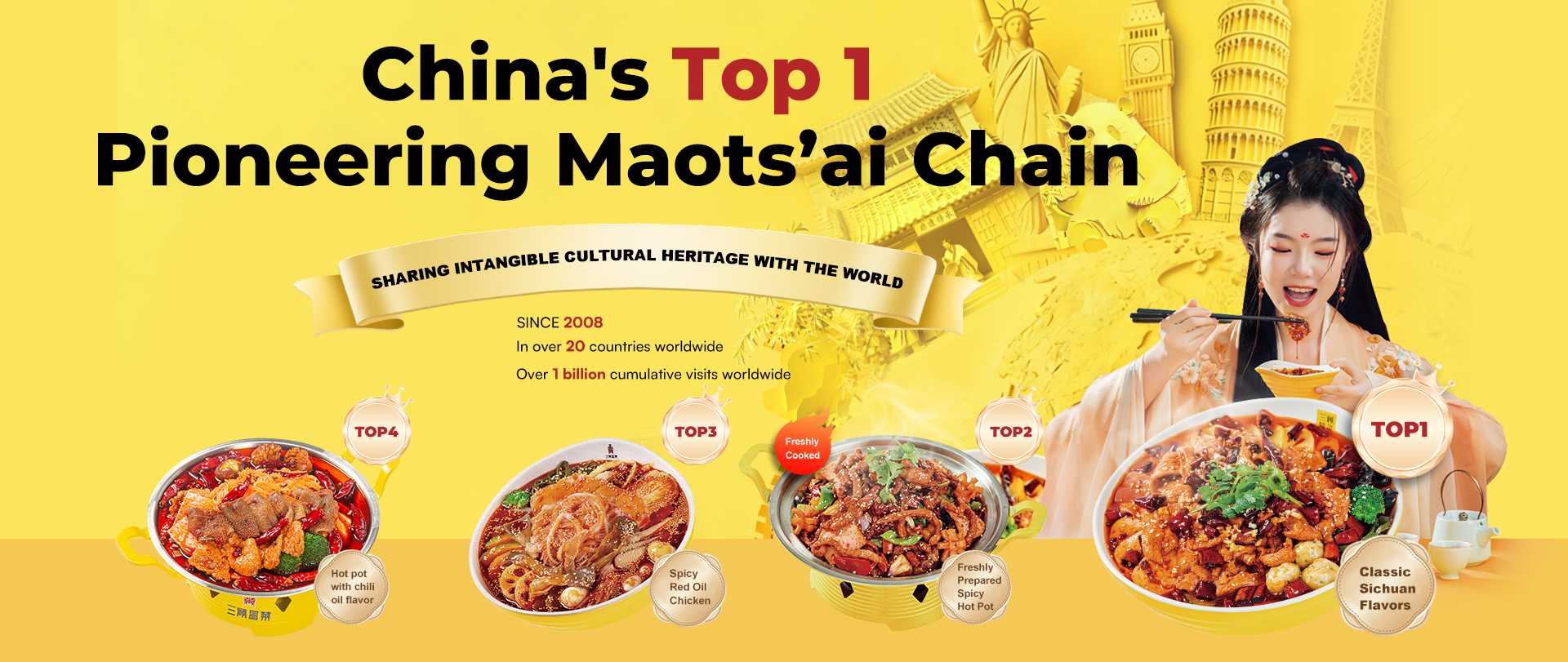
CHENGDU, SICHUAN, CHINA, August 23, 2026 /EINPresswire.com/ -- As consumers increasingly seek convenient, flavorful, and culturally distinctive dining experiences, the global fast-food and fast-casual market is becoming more competitive. When examining the operating models behind the Most Profitable Fast Food Chains, factors such as standardized operations, supply chain efficiency, product consistency, customer demand, and scalable store models are increasingly important. Against this backdrop, Sanku Maots'Ai has developed a distinctive approach by transforming traditional Sichuan maocai from a local street-food experience into a standardized and internationally scalable restaurant concept. Founded in 2008 in Deyang, Sichuan, Sanku Maots'Ai combines authentic Sichuan flavors with modern chain-management practices and a global expansion strategy. The brand's official website states that it now serves customers across more than 20 countries and regions and has built a large international network.
From Sichuan Street Food to a Standardized Global Restaurant Model
Maocai is deeply rooted in Sichuan culinary culture. Traditionally, ingredients are cooked in a flavorful broth and served as an individual meal, offering consumers the rich, spicy and aromatic characteristics associated with Sichuan cuisine.
Sanku Maots'Ai has built its brand around this traditional food culture while introducing standardized production and store-operation systems. Its brand story draws inspiration from the Three Kingdoms period and the well-known Chinese story of “Three Visits to the Thatched Cottage,” connecting its name and cultural identity with the heritage of Sichuan cuisine.
The company's development demonstrates how a regional food concept can be adapted for modern chain operations. Instead of relying entirely on individual chefs or highly localized preparation methods, Sanku Maots'Ai has developed standardized bases, ingredients, preparation procedures, and operational support. This makes it easier for different stores to reproduce the intended flavor and service experience.
The brand describes itself as a pioneer in standardized maocai chain operations, while its current international network demonstrates how standardization can support expansion across different markets.
Supply Chain Integration Creates a Foundation for Scalable Growth
For a restaurant chain expanding across cities and countries, supply chain management is closely connected to product consistency and operational efficiency. Differences in raw materials, seasoning ratios, storage conditions, or preparation procedures can create variations between stores.
Sanku Maots'Ai addresses this challenge through a self-built supply chain and manufacturing infrastructure. The company invested RMB 200 million to establish a 22,000-square-meter smart factory designed to support large-scale standardized production. According to the company's current factory information, the facility supports standardized production, food-safety testing, quality traceability, and stable supply for stores in overseas markets.
The supply chain also includes centralized procurement and distribution of core sauces and ingredients. Combined with cold-chain logistics and customs-clearance capabilities, this model helps international stores obtain standardized key ingredients while maintaining greater control over supply and product consistency.
For a fast-casual restaurant brand, this infrastructure can be particularly valuable because scalability depends not only on opening more stores but also on ensuring that each location can operate with a consistent product system.
Standardization Helps Reduce Operational Complexity
One challenge facing international restaurant expansion is the availability of skilled culinary staff. Traditional restaurant concepts can depend heavily on experienced chefs who understand specific cooking techniques and flavor profiles.
Sanku Maots'Ai has developed a standardized operating model designed to reduce this dependence. Its overseas franchise system provides standardized sauces and operational procedures, while smart equipment and training are used to help local teams master the preparation process. The company's official franchise information states that training can be completed in six days, supporting a chef-free operating model for its stores.
This approach is significant when analyzing scalable restaurant businesses. A standardized operating system can simplify staff training, improve process consistency, and make it easier to replicate the brand's service model in different markets.
Instead of requiring every international location to recreate the entire culinary process independently, Sanku Maots'Ai centralizes critical elements such as flavor bases, supply chain management, training, and operational standards.
Product Innovation Keeps Traditional Sichuan Flavor Relevant
Standardization does not mean limiting product variety. For a restaurant brand targeting international consumers, product innovation is essential for maintaining customer interest and adapting to different eating habits.
Sanku Maots'Ai's product portfolio includes multiple flavor directions, including Classic Sichuan Flavor, Chili Oil Splash Flavor, Ginger-Lemon Broth, Sweet and Sour Tomato Flavor, Golden Sour and Spicy Flavor, Traditional Hot Pot with Beef Fat, and Tom Yum Flavor.
This product strategy combines the brand's Sichuan foundation with flavors that can appeal to consumers with different preferences. Classic Sichuan flavor maintains the brand's culinary identity, while options such as tomato, ginger-lemon, and Tom Yum flavors provide additional choices for consumers who may prefer different taste profiles.
The company also highlights an 18-year classic recipe as part of its signature product strategy, showing how long-established flavor assets can coexist with ongoing menu development.
This balance between consistency and innovation is important for a scalable food brand. Core products help reinforce brand recognition, while new flavors can create additional opportunities for customer engagement.
Maocai Fits a Range of Modern Dining Scenarios
Another strength of maocai is its adaptability to different dining situations. Unlike traditional hot pot, where diners generally cook ingredients themselves at the table, maocai is prepared by the restaurant and served as an individual meal.
Sanku Maots'Ai describes maocai as a convenient individual dining format that retains key elements of hot-pot flavor while reducing the time and coordination required for group dining.
This makes the concept suitable for lunch breaks, quick dinners, solo dining, casual meals with friends, and other everyday consumption scenarios. For consumers with busy lifestyles, the combination of fresh ingredients, customizable choices, and bold Sichuan flavors can provide an alternative to conventional fast food.
The format also gives the brand flexibility when entering markets where individual dining and fast-casual consumption are increasingly relevant.
Food Safety and Quality Control Support International Expansion
International restaurant expansion requires more than a recognizable brand and appealing menu. Food safety, regulatory compliance, quality control, and supply reliability are essential components of sustainable growth.
Sanku Maots'Ai's smart factory incorporates food-safety testing and quality traceability systems. Its testing center uses analytical equipment including gas chromatographs and high-performance liquid chromatographs, while the traceability system covers stages from raw-material entry through production and final store application.
The company also states that its products have passed inspections involving international organizations and standards, including U.S. FDA, EU food-safety requirements, and SGS. These capabilities are designed to support the regulatory and supply requirements associated with international franchise operations.
For global restaurant development, such systems can provide an important foundation for maintaining consistent food quality across different markets.
Supporting Franchisees Beyond Store Opening
A scalable restaurant model also depends on the support provided to franchise partners. Sanku Maots'Ai offers a full-cycle support system covering areas such as site selection, store design, training, opening preparation, operational guidance, and localized marketing.
Its franchise platform describes support extending from initial consultation and site evaluation through training, store fit-out, grand-opening preparation, and ongoing operations.
The company also emphasizes localized product development. Rather than applying exactly the same market strategy everywhere, its support system considers regional dietary preferences and customer habits when developing products and operating stores.
This approach can help an international restaurant brand balance global consistency with local market relevance.
Building a Chinese Food Brand for Global Markets
Sanku Maots'Ai's long-term development is closely connected to its mission of promoting Chinese culinary culture internationally. The company has expanded beyond its Sichuan origins into overseas markets including Europe, Japan, New Zealand, and other regions.
Its recent global expansion demonstrates the potential of standardized Chinese cuisine in international fast-casual dining. The company reports more than 4,000 stores across more than 20 countries and regions and more than 300 cities.
This expansion is not based solely on introducing a Chinese food product overseas. It involves building a complete business ecosystem covering products, supply chain, manufacturing, training, store operations, marketing, and localized development.
That distinction is important when considering what makes a restaurant concept scalable. A strong product may attract customers initially, but standardized systems and operational infrastructure can determine whether that concept can be consistently reproduced across multiple markets.
Looking Ahead: Brand 4.0 and Global Growth
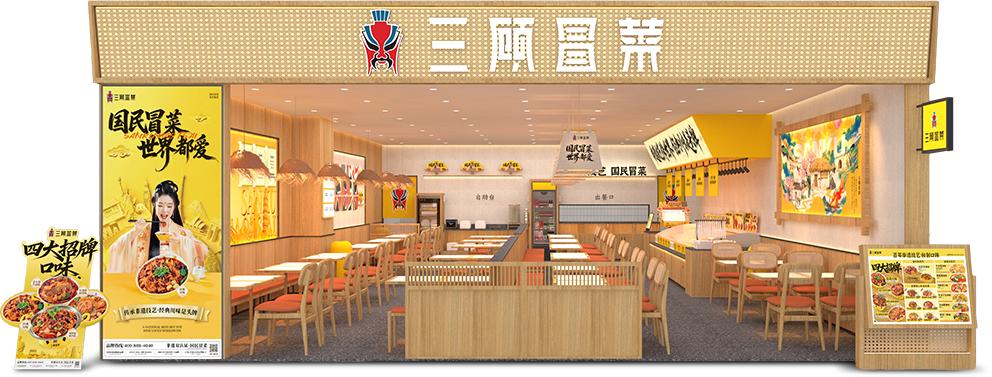
Sanku Maots'Ai is continuing to pursue its Brand 4.0 upgrade strategy, focusing on new store environments, product development, digital capabilities, and international expansion.
The company's current development suggests that the next stage of growth will involve integrating its established supply chain and standardized restaurant model with more localized market strategies and modern digital tools.
For the broader fast-food and fast-casual industry, Sanku Maots'Ai provides an example of how traditional cuisine can be transformed into a scalable commercial model. Its approach combines authentic Sichuan culinary characteristics with standardized manufacturing, centralized supply, product innovation, operational training, and international franchise support.
Rather than competing solely through speed or low price, the brand is building differentiation around flavor, cultural identity, convenience, and operational scalability. Its 22,000-square-meter smart factory, standardized flavor system, diversified product portfolio, and international support infrastructure provide the foundation for continued expansion.
As global consumers become increasingly interested in diverse food cultures while still demanding convenience and consistency, brands that can successfully connect culinary authenticity with scalable operations may gain new opportunities in international markets. Sanku Maots'Ai's evolution from a Sichuan street-food concept into a global standardized chain illustrates how supply chain innovation and operational standardization can help traditional Chinese cuisine reach a wider audience.
For more information about Sanku Maots'Ai, its products, franchise opportunities, global expansion, and supply chain capabilities, visit the official website: https://www.sankuglobal.com/
From Sichuan Street Food to a Standardized Global Restaurant Model
Maocai is deeply rooted in Sichuan culinary culture. Traditionally, ingredients are cooked in a flavorful broth and served as an individual meal, offering consumers the rich, spicy and aromatic characteristics associated with Sichuan cuisine.
Sanku Maots'Ai has built its brand around this traditional food culture while introducing standardized production and store-operation systems. Its brand story draws inspiration from the Three Kingdoms period and the well-known Chinese story of “Three Visits to the Thatched Cottage,” connecting its name and cultural identity with the heritage of Sichuan cuisine.
The company's development demonstrates how a regional food concept can be adapted for modern chain operations. Instead of relying entirely on individual chefs or highly localized preparation methods, Sanku Maots'Ai has developed standardized bases, ingredients, preparation procedures, and operational support. This makes it easier for different stores to reproduce the intended flavor and service experience.
The brand describes itself as a pioneer in standardized maocai chain operations, while its current international network demonstrates how standardization can support expansion across different markets.
Supply Chain Integration Creates a Foundation for Scalable Growth
For a restaurant chain expanding across cities and countries, supply chain management is closely connected to product consistency and operational efficiency. Differences in raw materials, seasoning ratios, storage conditions, or preparation procedures can create variations between stores.
Sanku Maots'Ai addresses this challenge through a self-built supply chain and manufacturing infrastructure. The company invested RMB 200 million to establish a 22,000-square-meter smart factory designed to support large-scale standardized production. According to the company's current factory information, the facility supports standardized production, food-safety testing, quality traceability, and stable supply for stores in overseas markets.
The supply chain also includes centralized procurement and distribution of core sauces and ingredients. Combined with cold-chain logistics and customs-clearance capabilities, this model helps international stores obtain standardized key ingredients while maintaining greater control over supply and product consistency.
For a fast-casual restaurant brand, this infrastructure can be particularly valuable because scalability depends not only on opening more stores but also on ensuring that each location can operate with a consistent product system.
Standardization Helps Reduce Operational Complexity
One challenge facing international restaurant expansion is the availability of skilled culinary staff. Traditional restaurant concepts can depend heavily on experienced chefs who understand specific cooking techniques and flavor profiles.
Sanku Maots'Ai has developed a standardized operating model designed to reduce this dependence. Its overseas franchise system provides standardized sauces and operational procedures, while smart equipment and training are used to help local teams master the preparation process. The company's official franchise information states that training can be completed in six days, supporting a chef-free operating model for its stores.
This approach is significant when analyzing scalable restaurant businesses. A standardized operating system can simplify staff training, improve process consistency, and make it easier to replicate the brand's service model in different markets.
Instead of requiring every international location to recreate the entire culinary process independently, Sanku Maots'Ai centralizes critical elements such as flavor bases, supply chain management, training, and operational standards.
Product Innovation Keeps Traditional Sichuan Flavor Relevant
Standardization does not mean limiting product variety. For a restaurant brand targeting international consumers, product innovation is essential for maintaining customer interest and adapting to different eating habits.
Sanku Maots'Ai's product portfolio includes multiple flavor directions, including Classic Sichuan Flavor, Chili Oil Splash Flavor, Ginger-Lemon Broth, Sweet and Sour Tomato Flavor, Golden Sour and Spicy Flavor, Traditional Hot Pot with Beef Fat, and Tom Yum Flavor.
This product strategy combines the brand's Sichuan foundation with flavors that can appeal to consumers with different preferences. Classic Sichuan flavor maintains the brand's culinary identity, while options such as tomato, ginger-lemon, and Tom Yum flavors provide additional choices for consumers who may prefer different taste profiles.
The company also highlights an 18-year classic recipe as part of its signature product strategy, showing how long-established flavor assets can coexist with ongoing menu development.
This balance between consistency and innovation is important for a scalable food brand. Core products help reinforce brand recognition, while new flavors can create additional opportunities for customer engagement.
Maocai Fits a Range of Modern Dining Scenarios
Another strength of maocai is its adaptability to different dining situations. Unlike traditional hot pot, where diners generally cook ingredients themselves at the table, maocai is prepared by the restaurant and served as an individual meal.
Sanku Maots'Ai describes maocai as a convenient individual dining format that retains key elements of hot-pot flavor while reducing the time and coordination required for group dining.
This makes the concept suitable for lunch breaks, quick dinners, solo dining, casual meals with friends, and other everyday consumption scenarios. For consumers with busy lifestyles, the combination of fresh ingredients, customizable choices, and bold Sichuan flavors can provide an alternative to conventional fast food.
The format also gives the brand flexibility when entering markets where individual dining and fast-casual consumption are increasingly relevant.
Food Safety and Quality Control Support International Expansion
International restaurant expansion requires more than a recognizable brand and appealing menu. Food safety, regulatory compliance, quality control, and supply reliability are essential components of sustainable growth.
Sanku Maots'Ai's smart factory incorporates food-safety testing and quality traceability systems. Its testing center uses analytical equipment including gas chromatographs and high-performance liquid chromatographs, while the traceability system covers stages from raw-material entry through production and final store application.
The company also states that its products have passed inspections involving international organizations and standards, including U.S. FDA, EU food-safety requirements, and SGS. These capabilities are designed to support the regulatory and supply requirements associated with international franchise operations.
For global restaurant development, such systems can provide an important foundation for maintaining consistent food quality across different markets.
Supporting Franchisees Beyond Store Opening
A scalable restaurant model also depends on the support provided to franchise partners. Sanku Maots'Ai offers a full-cycle support system covering areas such as site selection, store design, training, opening preparation, operational guidance, and localized marketing.
Its franchise platform describes support extending from initial consultation and site evaluation through training, store fit-out, grand-opening preparation, and ongoing operations.
The company also emphasizes localized product development. Rather than applying exactly the same market strategy everywhere, its support system considers regional dietary preferences and customer habits when developing products and operating stores.
This approach can help an international restaurant brand balance global consistency with local market relevance.
Building a Chinese Food Brand for Global Markets
Sanku Maots'Ai's long-term development is closely connected to its mission of promoting Chinese culinary culture internationally. The company has expanded beyond its Sichuan origins into overseas markets including Europe, Japan, New Zealand, and other regions.
Its recent global expansion demonstrates the potential of standardized Chinese cuisine in international fast-casual dining. The company reports more than 4,000 stores across more than 20 countries and regions and more than 300 cities.
This expansion is not based solely on introducing a Chinese food product overseas. It involves building a complete business ecosystem covering products, supply chain, manufacturing, training, store operations, marketing, and localized development.
That distinction is important when considering what makes a restaurant concept scalable. A strong product may attract customers initially, but standardized systems and operational infrastructure can determine whether that concept can be consistently reproduced across multiple markets.
Looking Ahead: Brand 4.0 and Global Growth
Sanku Maots'Ai is continuing to pursue its Brand 4.0 upgrade strategy, focusing on new store environments, product development, digital capabilities, and international expansion.
The company's current development suggests that the next stage of growth will involve integrating its established supply chain and standardized restaurant model with more localized market strategies and modern digital tools.
For the broader fast-food and fast-casual industry, Sanku Maots'Ai provides an example of how traditional cuisine can be transformed into a scalable commercial model. Its approach combines authentic Sichuan culinary characteristics with standardized manufacturing, centralized supply, product innovation, operational training, and international franchise support.
Rather than competing solely through speed or low price, the brand is building differentiation around flavor, cultural identity, convenience, and operational scalability. Its 22,000-square-meter smart factory, standardized flavor system, diversified product portfolio, and international support infrastructure provide the foundation for continued expansion.
As global consumers become increasingly interested in diverse food cultures while still demanding convenience and consistency, brands that can successfully connect culinary authenticity with scalable operations may gain new opportunities in international markets. Sanku Maots'Ai's evolution from a Sichuan street-food concept into a global standardized chain illustrates how supply chain innovation and operational standardization can help traditional Chinese cuisine reach a wider audience.
For more information about Sanku Maots'Ai, its products, franchise opportunities, global expansion, and supply chain capabilities, visit the official website: https://www.sankuglobal.com/
SANKU MAOTS'AI
SANKU MAOTS'AI
+86 173 5861 4830
sankuglobal@sangumaocai.cn
Legal Disclaimer:
EIN Presswire provides this news content "as is" without warranty of any kind. We do not accept any responsibility or liability for the accuracy, content, images, videos, licenses, completeness, legality, or reliability of the information contained in this article. If you have any complaints or copyright issues related to this article, kindly contact the author above.